Free Weighted Decision Matrix & Pugh Trade-Off Calculator (PDF, Notion & Sheets)
A weighted decision matrix template (also called a Pugh matrix or multi-criteria scorecard) replaces gut-feel debates and recency bias with transparent math: assign numerical weights (1–5) to your core criteria before scoring each option from 1 to 10, normalize the weighted total out of 100, and stress-test the winner with a 3-minute pre-mortem. Use our live calculator below, print the 1-page A4/US Letter PDF scorecard, or copy the Markdown decision table into Notion, Slack, or GitHub.
Interactive Weighted Decision Matrix & Pre-Mortem Calculator (Free PDF & Notion Export)
Set your criterion weights (1–5) and score each option (1–10) below to compute Normalized 100-Point Scores, Victory Margin, and Halo-Bias Hygiene.
What’s in the template
- Pre-Committed Criterion Weights (1–5): Separates how much a criterion matters from how well each option performs so teams cannot rig the rubric mid-debate.
- Row-by-Row Horizontal Scoring Grid (1–10): Structured to evaluate Criterion 1 across all options before moving to Criterion 2, neutralizing the Halo Effect.
- Bezos Type 1 vs. Type 2 Door Filter: Flags whether a choice is a reversible Two-Way Door (decide within 24 hours at 70% information) or an irreversible One-Way Door requiring deep diligence.
- Gary Klein Pre-Mortem & Kill-Criterion Box: Captures the most likely 6-month failure mode and a quantitative tripwire metric before execution begins.
How to run a Weighted Decision Matrix in 15 minutes
- Always include a Status-Quo / Baseline column: Following Stuart Pugh’s method, anchor Option C to your current baseline so new proposals must prove a net positive margin.
- Lock weights before naming your favorite option: Agree on the 1–5 weights with stakeholders in your Meeting Notes pre-read before anyone argues for a specific vendor or architecture.
- Score horizontally row-by-row: Rate every option on Strategic Impact first, then Speed, then Risk.
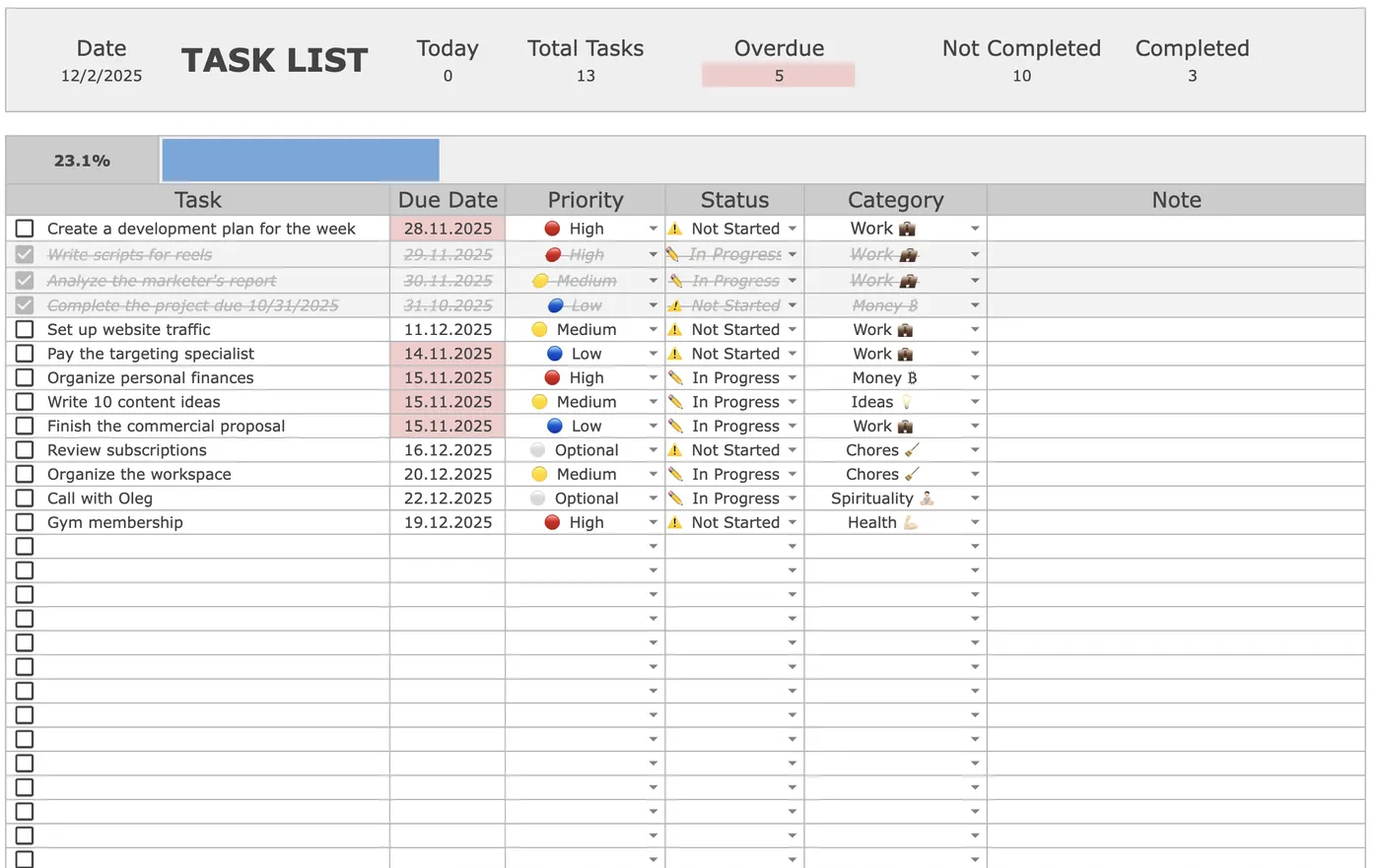
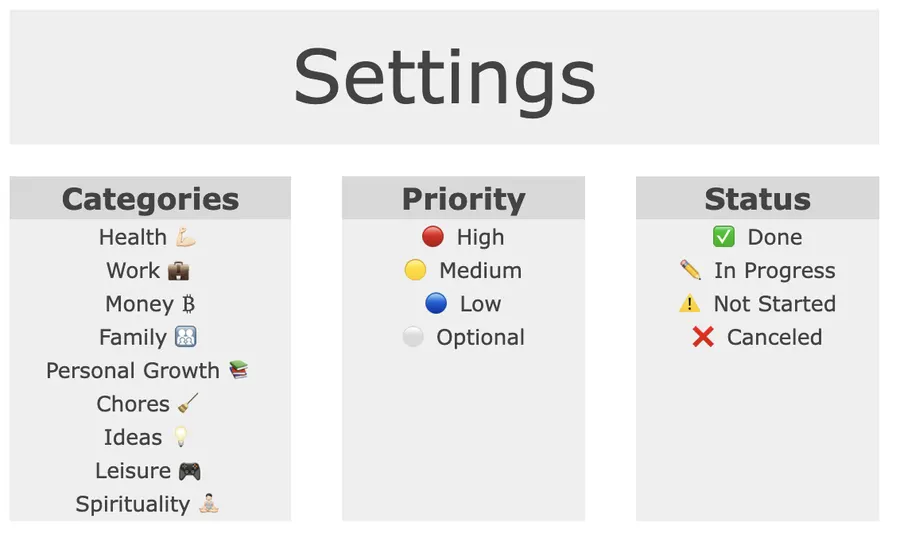
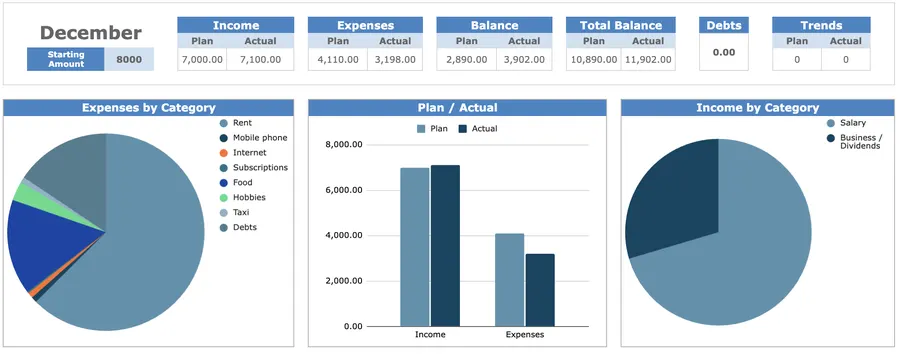
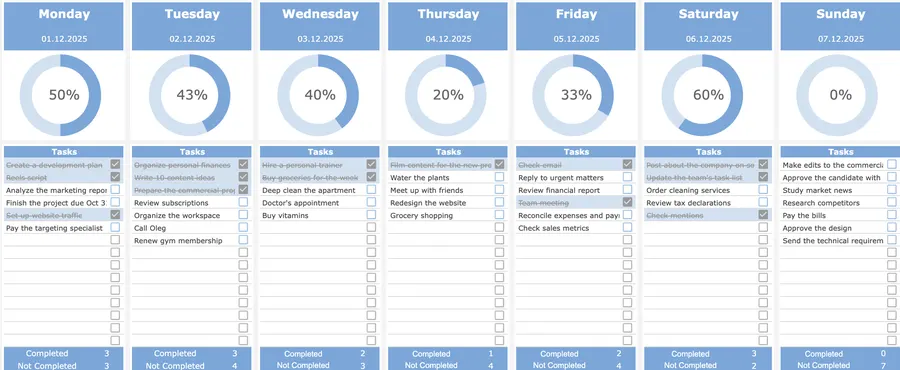
- Convert the winner into a 12-week milestone: Log the signed-off decision in your Project Tracker and Task Tracker with a single DRI.
Up close

Decision Frameworks Compared: Weighted Matrix vs. Pugh Controlled Convergence vs. Pros/Cons List vs. Pre-Mortem
| Decision framework | Core mechanism | Primary cognitive bias countered | Best use case |
|---|---|---|---|
| Weighted Decision Matrix | Criteria weights (1–5) × independent scores (1–10) | Halo effect & single-attribute fixation | Vendor selection, roadmap prioritization, hiring & pricing |
| Pugh Matrix (Baseline = 0) | Scores candidates as +, 0, or − against current datum | Status-quo blindness & feature creep | Engineering design reviews & architectural trade-offs |
| Simple Pros & Cons List | Unweighted two-column bullet brainstorm | None (vulnerable to bullet-count padding) | Quick Type 2 personal choices with 2 options |
| Gary Klein Pre-Mortem | Prospective hindsight (“Assume the project failed – why?”) | Overconfidence, groupthink & planning fallacy | Stress-testing the winning option before launch |
How to prevent “Matrix Rigging” during team decision meetings
Every experienced operator has seen a colleague build a spreadsheet after already choosing their favorite option, tweaking the weights until their preferred choice wins by 2 points. Enforce three decision-hygiene rules when using this template with a team:
- Blind Silent Scoring (2 minutes): Have each stakeholder write their 1–10 scores for Criterion 1 silently before the highest-paid person in the room speaks, preventing anchoring.
- The 5-Point Tie Rule: Treat any normalized score gap smaller than 5 points (out of 100) as a statistical tie and break the tie using Execution Speed or a 48-hour empirical test.
- Mandatory Tripwire Metric: Never approve a winning option without writing down the exact metric and date that will trigger a review or rollback.
The decision science behind Weighted Matrices: Mediating assessments, Controlled Convergence, and Pre-Mortems (Kahneman et al., Pugh, and Klein)
Why do simple weighted formulas consistently outperform unaided executive intuition on complex choices? First, building on half a century of judgment research from Paul Meehl (1954) and Robyn Dawes (1979), Nobel laureate Daniel Kahneman, Dan Lovallo, and Olivier Sibony demonstrated that decomposing a complex decision into independent criteria weights and scoring one attribute at a time across options (a protocol called mediating assessments) neutralizes the Halo Effect and substantially reduces judgment noise (Kahneman, Lovallo, & Sibony, 2011, Harvard Business Review; see also Kahneman, Sibony, & Sunstein, 2021, Noise). Second, engineering design professor Stuart Pugh proved that anchoring trade-off tables against an explicit baseline datum (Pugh Controlled Convergence) prevents teams from prematurely converging on flashy concepts with hidden integration costs (Pugh, 1990, Total Design). Third, naturalistic decision researcher Gary Klein showed that pairing option selection with prospective hindsight – instructing the team to imagine that 6 months have passed and the chosen option has failed – increases the ability to identify concrete failure modes by 30% compared with standard risk brainstorming (Klein, 2007, Harvard Business Review; building on experimental prospective-hindsight research by Mitchell, Russo, & Pennington, 1989, Journal of Behavioral Decision Making).
Frequently asked questions
Is this Weighted Decision Matrix and Pugh calculator template free?
Yes. You can weight your criteria, score up to three options (1–10), and run a Gary Klein pre-mortem in the interactive Weighted Decision Matrix calculator on this page, copy the Markdown table into Notion, Slack, or GitHub, or print the 1-page A4/US Letter scorecard for free. If you want an automated project and task execution tracker in Google Sheets once your decision is locked, check out our Task & Priority Tracker ($9).
How do you calculate a Weighted Decision Matrix step by step?
1. List the 2 to 4 viable options under consideration (including a baseline or status-quo option). 2. Define 3 to 6 independent evaluation criteria (such as Strategic Impact, Execution Speed, and Downside Risk/Cost) and assign each a numerical weight from 1 (low importance) to 5 (critical importance) before scoring any option. 3. Score every option from 1 to 10 on Criterion 1 across the row first, then Criterion 2, and so on. 4. Multiply each raw score by its criterion weight and sum the weighted points to normalize onto a 0–100 scale.
Why should you score options row-by-row across criteria instead of column-by-column?
Nobel laureate Daniel Kahneman and decision-hygiene researchers showed that when people evaluate Option A across all criteria from top to bottom before moving to Option B, their initial impression triggers the Halo Effect: they unconsciously inflate Option A’s speed and risk scores to match their fondness for its strategic story. Scoring Criterion 1 across Option A, Option B, and Option C horizontally forces independent mediating assessments and cuts decision noise.
What is the difference between a Type 1 (One-Way Door) and Type 2 (Two-Way Door) decision?
Popularized by Jeff Bezos in his 2015 shareholder letter, Type 1 decisions are consequential and nearly irreversible (one-way doors, such as selling a company, signing a 5-year lease, or deprecating a core API); they warrant a full weighted matrix, a 90% information threshold, and a pre-mortem. Type 2 decisions are reversible (two-way doors, such as A/B testing a pricing tier or trialing a vendor); they should be made within 24 hours by a single Directly Responsible Individual (DRI) once you have ~70% of the information.
What should I do when two options finish within 5% of each other on the matrix?
When Option A and Option B finish within 5 points on a 100-point scale, they are statistically tied given human estimation error. Do not spend another week tweaking weights: if it is a reversible Type 2 decision, pick the option with faster execution speed today; if it is an irreversible Type 1 decision, run a 48-hour spike test on the single highest-weight criterion where the two options diverge.
Want the complete Focus Protocol system?
Get the automated Task & Priority Tracker for Google Sheets ($9), or combine it with our Eisenhower Matrix Template, Project Tracker, Meeting Notes Template, Weekly Review Template, and Goal Tracker in the All-in-One Bundle ($29).