Free Weekly Review & GTD Friday Reset Template (PDF, Notion & Sheets)
A weekly review template is the 45-minute Friday operating ritual that keeps your productivity system from collapsing into a graveyard of stale tasks: sweep your four capture inboxes to zero, audit planned versus shipped commitments, prune zombie carryovers, and lock in next week’s Top 3 keystone rocks on your calendar. Run your interactive Friday audit below, print the 1-page A4/US Letter PDF checklist, or automate weekly tracking in Google Sheets.
Interactive 5-Stage Weekly Review & Carryover Audit Builder (Free PDF & Notion Export)
Enter your weekly planned versus completed tasks and review notes below to calculate your Execution Rate, Carryover Debt, and Weekend Cognitive Closure, then export to PDF or Notion/Markdown.
What’s in the template
- Stage 1 · 4-Inbox Zero Sweep Checklist: Systematic pass across email, Slack/Teams saved messages, digital Downloads/voice notes, and your physical desk pad so zero uncaptured tasks lurk outside your system.
- Stage 2 · −7 / +14 Day Calendar & Waiting-For Audit: Looks back 7 days for forgotten meeting follow-ups, looks ahead 14 days to block preparation time before deadlines hit, and nudges delegated @DRI items.
- Stage 3 & 4 · Execution Scorecard & Zombie-Task Pruner: Calculates your weekly completion rate and forces you to drop or defer any task carried over more than twice (capping carryovers at ≤2 items).
- Stage 5 · Next Week’s Top 3 Keystone Rocks: Connects your review directly to your Weekly Planner and Time Blocking Schedule by assigning each priority a specific day and morning slot.
How to run a 45-minute Friday GTD Weekly Review
- Protect Friday 15:30–16:15 on your calendar: Treat your weekly review as an unbreakable recurring appointment before weekend fatigue sets in.
- Separate capture from execution (10 min): During Stage 1, do not stop to do 15-minute tasks; apply the 2-minute rule and move everything else into your Task Tracker.
- Kill at least 2 stale carryovers (10 min): Use the Eisenhower Matrix filter to delete Quadrant 4 items that survived two weeks without action.
- Write your 3 wins and lock Monday’s first 90-minute block (15 min): Update your 12-week Goal Tracker and schedule Monday morning’s deep-work sprint before closing your laptop.
Up close
The 5 Stages of a High-Leverage Weekly Review: Time Budgets, Triggers & Outputs
| Review stage | Time budget | Primary audit target | Concrete output |
|---|---|---|---|
| 1. Get Clear (Inbox Sweep) | 10 min | Email, Slack saved items, Downloads folder & physical desk notes | All 4 capture buckets at zero; actionable items logged with verbs |
| 2. Get Current (Horizon Scan) | 10 min | Past 7 days calendar, next 14 days calendar & Waiting-For list | Prep blocks scheduled for upcoming deadlines; @DRI nudges sent |
| 3. Reflect (Wins & Bottleneck) | 10 min | Planned vs. completed tasks & 12-week OKR lead indicators | Weekly completion % logged; 3 wins & 1 root bottleneck written |
| 4. Prune (Carryover Triage) | 5 min | Open tasks carried over ≥2 consecutive weeks | Zombie tasks deleted or moved to Someday/Maybe; ≤2 carryovers |
| 5. Lock Next Week (Top 3 Rocks) | 10 min | Next week’s calendar & Monday 08:30 anchor block | Top 3 keystone deliverables assigned to specific 90-minute slots |
Why Friday at 15:30 beats Sunday evening for your Weekly Review
Many professionals attempt their weekly review on Sunday night, only to skip it when family plans run late or experience “Sunday Scaries” anxiety when opening work email in bed. Running the review on Friday between 15:30 and 16:15 solves three structural problems at once:
- Colleagues are still online for Waiting-For nudges: A 30-second Slack or email check-in sent Friday at 15:45 gets answered before Monday morning; a Sunday-night message sits until Monday afternoon.
- Accurate bottleneck memory: On Friday afternoon you remember why Wednesday’s architecture spec slipped; by Sunday night those operational details have faded.
- True weekend cognitive detachment: Writing down Monday’s exact first action on Friday afternoon lets you close your laptop with zero lingering open loops.
The behavioral science of the Weekly Review: Structured reflection (+22.8% performance) and Zeigarnik closure (Di Stefano et al., Masicampo & Baumeister, and Allen)
Why does a 45-minute Friday review produce higher output than spending those same 45 minutes grinding through extra tasks? First, in controlled field and laboratory studies conducted by Harvard Business School and Bocconi researchers Giada Di Stefano, Francesca Gino, Gary P. Pisano, and Bradley R. Staats, professionals who spent 15 minutes at the end of their work cycle writing a structured reflection on what worked and what bottlenecks occurred performed 22.8% better on subsequent performance assessments than peers who spent that exact same time continuing to accumulate raw task experience – because deliberate reflection builds self-efficacy and surfaces systemic workflow defects (Di Stefano, Gino, Pisano, & Staats, 2014, Harvard Business School Working Paper / Organization Science). Second, psychologists E. J. Masicampo and Roy F. Baumeister proved that unfulfilled weekly goals continue to trigger involuntary cognitive intrusions (the Zeigarnik Effect) during leisure hours, whereas committing each remaining open loop to a concrete when-and-where plan for next week completely eliminates that mental interference before the task is even executed (Masicampo & Baumeister, 2011, Journal of Personality and Social Psychology; operationalizing the five-stage Weekly Review formalized by David Allen, 2001, Getting Things Done).
Frequently asked questions
Is this Weekly Review and GTD Friday Reset template free to download and print?
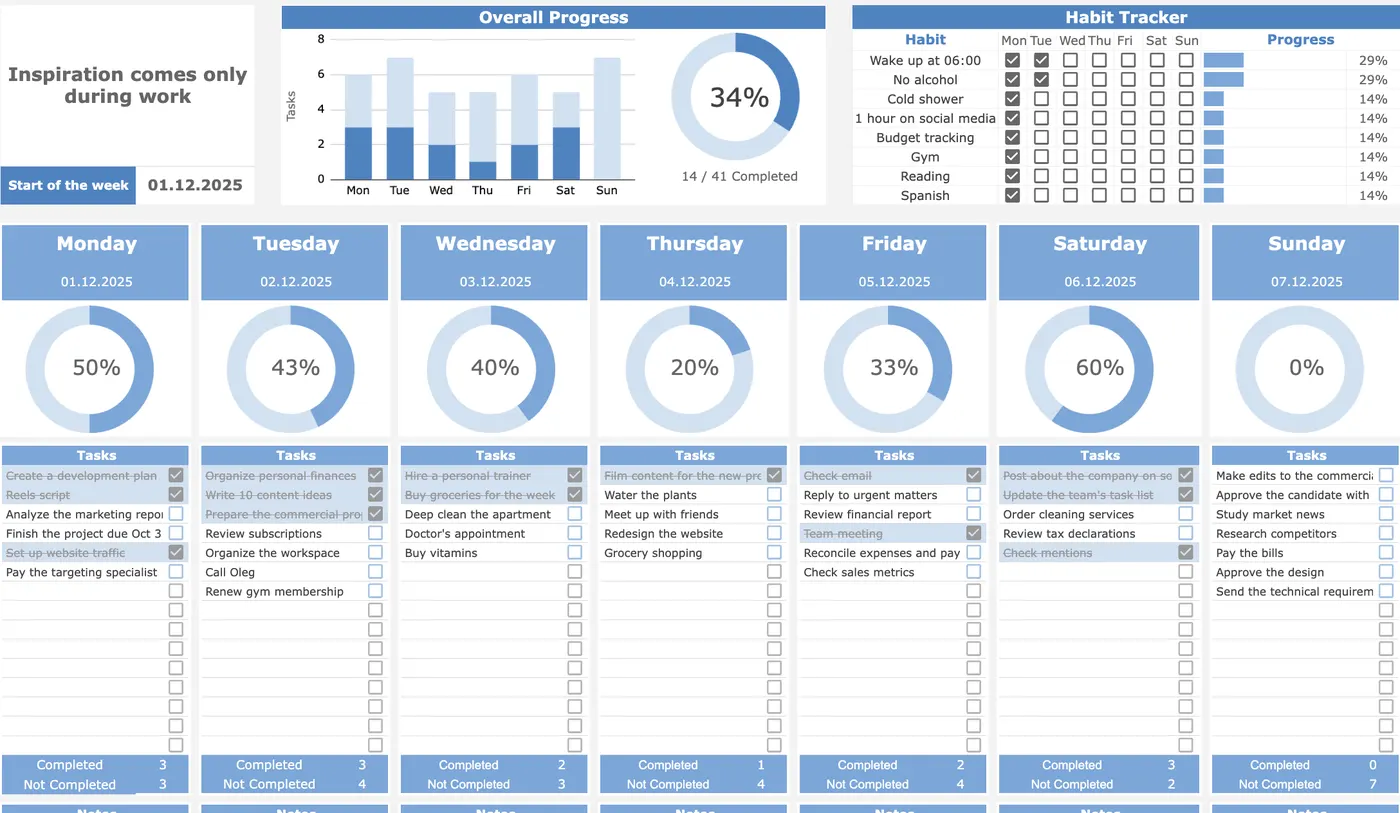
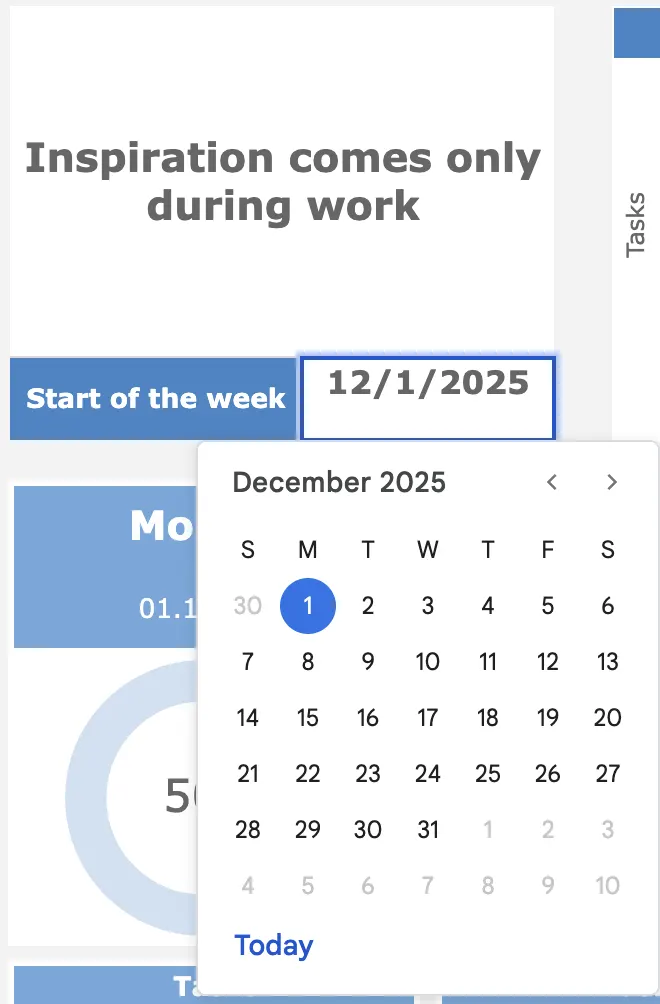
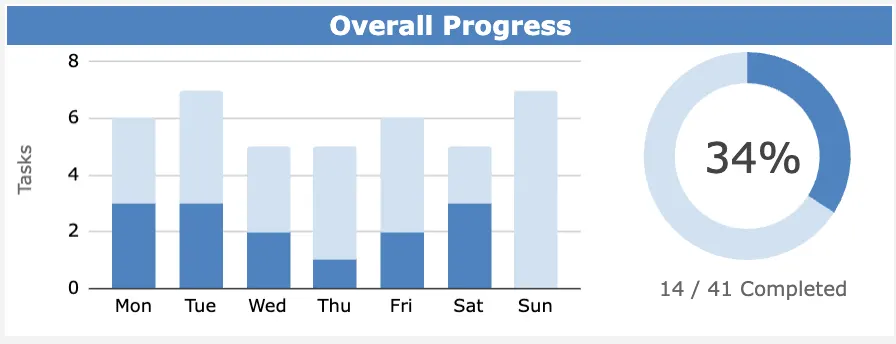
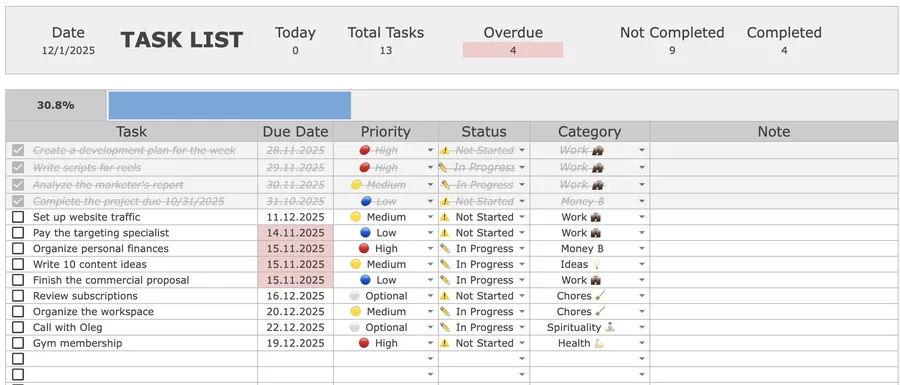
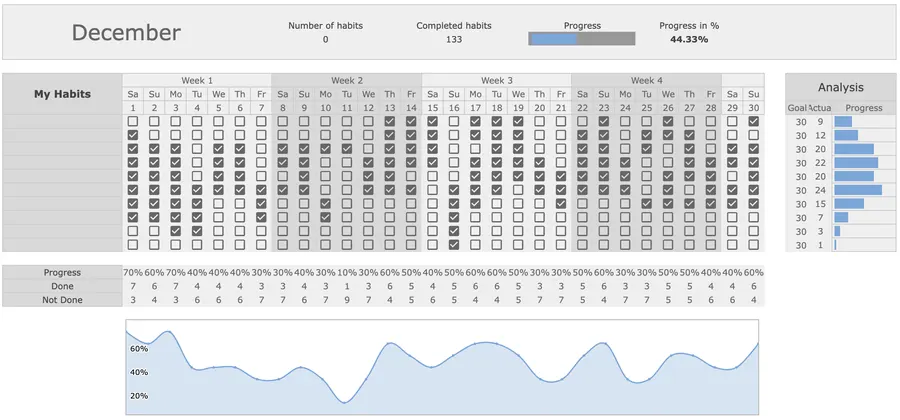
Yes. You can calculate your weekly completion rate and carryover load in the interactive 5-Stage Weekly Review builder on this page, copy a structured Markdown review into Notion or Obsidian, or print the 1-page A4/US Letter checklist for free. If you want automated weekly completion rings, daily task tracking, and habit streaks in Google Sheets, the Focus Protocol Weekly Planner is a one-time $12 purchase.
What are the 5 stages of an effective GTD Weekly Review?
1. Get Clear (10 min): Empty all four capture buckets (email inbox, Slack/Teams saved messages, mobile notes/Downloads folder, and physical desk pad) into concrete tasks or archive. 2. Get Current (10 min): Audit the past 7 days of calendar events for uncaptured follow-ups, scan the next 14 days for upcoming prep deadlines, and nudge open Waiting-For items. 3. Reflect (10 min): Log your Top 3 shipped wins and diagnose the single root bottleneck behind stalled work. 4. Prune (5 min): Delete or move to Someday/Maybe any task carried over more than twice, capping active carryovers at 2 items. 5. Lock Next Week’s Rocks (10 min): Choose next week’s Top 3 keystone deliverables and block a specific day and 90-minute morning slot for each.
Should I run my weekly review on Friday afternoon or Sunday evening?
Friday afternoon (for example, 15:30 to 16:15) is superior for knowledge workers because context from the week is still fresh in working memory, colleagues are still online to receive Waiting-For nudges, and closing open loops before Friday evening prevents the Zeigarnik Effect from generating intrusive work thoughts over the weekend. If you prefer Sunday evening, use a shorter 15-minute calendar confirmation after completing the heavy inbox sweep on Friday.
What is a healthy weekly task completion rate, and why should I drop tasks?
A healthy execution rate is 75% to 90% of planned weekly commitments. Consistently scoring below 65% indicates over-scheduling (planning for an idealized 40-hour deep-work week instead of your real net capacity after meetings) or allowing Quadrant 3 interruptions to displace scheduled priorities. Deliberately dropping or delegating 2 to 3 low-value tasks every Friday prevents backlog bloat.
Can I use this weekly review template in Notion, Obsidian, or Google Sheets?
Yes. Click Copy Weekly Review (Markdown / Notion) in the interactive builder to paste a pre-formatted 5-stage review with checkboxes and KPI metrics directly into a Notion database page, Obsidian weekly note, or team retro doc, or pair it with the automated Focus Protocol Weekly Planner in Google Sheets.
Want the complete Focus Protocol system?
Get the automated Weekly Planner & Review System for Google Sheets ($12), or combine it with our Task Tracker, Goal Tracker, Eisenhower Matrix, Time Blocking Template, and Habit Tracker in the All-in-One Bundle ($29).