Free Pomodoro Planner & Ultradian Focus Session Template
A Pomodoro and focus sprint planner structures your hardest work into timed work-rest intervals (25/5 min Classic Pomodoros, 50/10 min Deep Sprints, or 90/20 min Ultradian Cycles) paired with a paper distraction-capture list so a stray thought never triggers a 23-minute browser derailment. Configure your daily focus sprints below, export a 1-page A4/US Letter PDF scorecard, or copy your session plan to Notion or Markdown.
Interactive Pomodoro & Ultradian Focus Sprint Builder (Free PDF & Markdown Export)
Pick your work-rest cadence, target cycle count, and sprint deliverables below, then print a 1-page PDF desk scorecard or copy your plan for Notion / Markdown.
What’s in the template
- 3 Cadence Modes (25/5, 50/10 & 90/20): Adapts to whether you need a low-friction 25-minute starter timer or a 90-minute ultradian block for deep architecture and writing.
- Deliberate Focus Ceiling Monitor: Automatically calculates net deep-work hours and warns when your planned sessions exceed the sustainable 4-hour cognitive ceiling.
- Internal vs. External Distraction Tally: Separate capture boxes for internal mind-wandering thoughts (“buy coffee filters”) and external pings so you stay in flow.
- Screen-Free Recovery Checklist: Prompts genuine physiological recovery between sprints instead of fatiguing dopamine scrolling.
How to run high-output focus sprints in 4 steps
- Define the micro-deliverable before starting the clock: Never start a timer with a vague label like “Work on project.” Write the exact output you will finish in the next 25, 50, or 90 minutes.
- Lock your environment: Put your phone in another room and close email/Slack tabs until your scheduled afternoon batch on your Time Blocking Schedule.
- Use the 3-second paper capture rule: The instant you feel the urge to look something up unrelated to your sprint, write the keyword in the Internal Distraction Capture box and keep working.
- Log completed sprints on your tracker: At day’s end, record your completed focus hours on your Daily Planner and Habit Tracker.
Up close
Cadence Comparison: 25/5 Pomodoro vs. 50/10 Deep Pomodoro vs. 90/20 Ultradian vs. Flowtime
| Focus protocol | Work / break ratio | Best task type | Cognitive mechanism |
|---|---|---|---|
| Classic Pomodoro | 25 min work / 5 min break | High-procrastination tasks, study & admin backlog | Lowers activation energy; frequent reward resets |
| Deep Pomodoro (50/10) | 50 min work / 10 min break | Software engineering, data analysis & drafting | Allows 15 min ramp-up + 35 min sustained working-memory depth |
| Ultradian Sprint (90/20) | 90 min work / 20 min break | System architecture, long-form writing & strategy | Matches the human 90-minute Basic Rest-Activity Cycle (BRAC) |
| Flowtime Technique | Open work / 20% break | Creative design & unpredictable debugging | Never interrupts active flow; scales break length to work duration |
How to overcome the “15-minute ramp-up” barrier
The hardest part of any deep focus block is the first 10 to 15 minutes, when your brain resists loading a complex problem into working memory and craves the easy novelty of an inbox check. Use two behavioral triggers on your printable scorecard:
- Start with a 25-minute “ignition” sprint, then extend: If a 90-minute block feels intimidating, commit to a single 25-minute Pomodoro on the very first sub-step. Once working memory is engaged, continue for a full 50- or 90-minute cycle.
- Leave a “Hemingway Bridge” at the end of Sprint 4: Before closing your laptop for the day, write down the exact first sentence or next function you will write tomorrow morning. Starting with a pre-loaded next action cuts morning ramp-up friction in half.
The science of deliberate practice, ultradian rhythms, and micro-breaks (Cirillo, Kleitman, Ericsson et al., and Ariga & Lleras)
Structuring deep work into bounded sprints separated by genuine rest is grounded in four bodies of cognitive and physiological research. First, software developer Francesco Cirillo formalized the 25/5 minute Pomodoro cadence and paper-based interruption logging to lower task-initiation friction and protect single-tasking flow (Cirillo, 2006, The Pomodoro Technique). Second, sleep and chronobiology pioneer Nathaniel Kleitman identified the human Basic Rest-Activity Cycle (BRAC), showing that the central nervous system oscillates through roughly 90-minute ultradian alertness waves throughout the waking day, after which physiological arousal dips and requires a 15- to 20-minute restorative trough (Kleitman, 1982, Sleep). Third, in their landmark study of elite performers, psychologists K. Anders Ericsson, Ralf Th. Krampe, and Clemens Tesch-Römer demonstrated that high-strain deliberate practice is biologically limited to roughly 3.5 to 4 hours per day, typically executed in 60- to 90-minute sessions with full recovery between bouts (Ericsson, Krampe, & Tesch-Römer, 1993, Psychological Review). Fourth, experimental vigilance research by Atsunori Ariga and Alejandro Lleras proved that brief mental micro-breaks prevent attention habituation and sustain focus across prolonged cognitive tasks by deactivating and reactivating task goals (Ariga & Lleras, 2011, Cognition; corroborated across 22 studies, N = 2,335, by Albulescu et al., 2022, PLOS ONE).
Frequently asked questions
Is this Pomodoro planner and focus session tracker free to download?
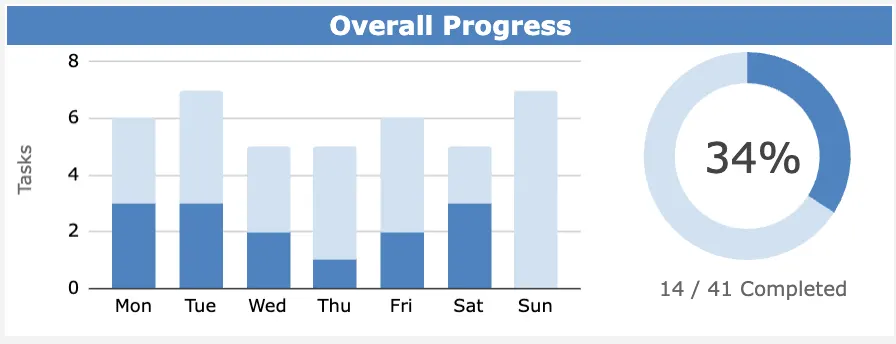
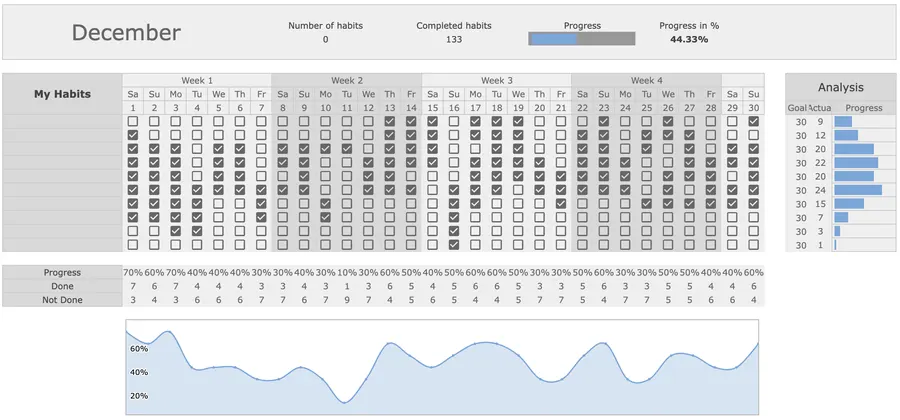
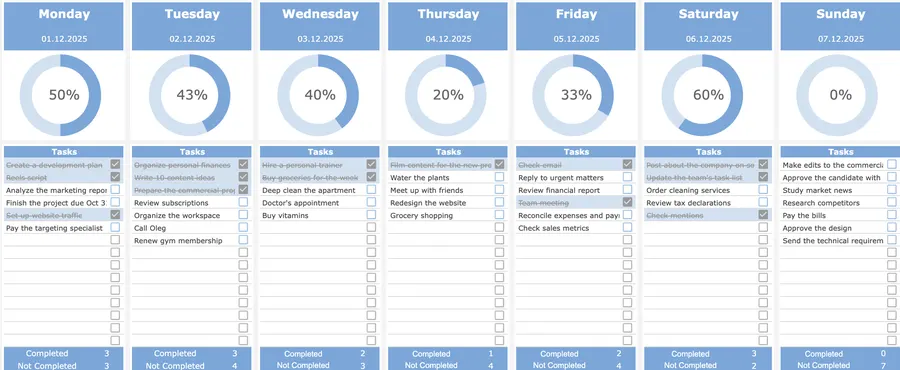
Yes. You can configure your focus cadence (25/5, 50/10, or 90/20 ultradian sprints), map your daily sessions, and export a 1-page A4/US Letter PDF or Markdown scorecard for free. If you want an automated 7-day and daily focus dashboard in Google Sheets with live completion rings and habit streaks, get the Focus Protocol Weekly & Daily Planner for a one-time $12.
Should I use 25-minute Pomodoros, 50-minute blocks, or 90-minute ultradian sprints?
Match the interval to the cognitive depth of the task and your current resistance level. Classic 25/5 Pomodoros work best when you feel high procrastination resistance or are clearing administrative tasks. Once you enter deep flow on complex coding, writing, or analytical modeling, 25-minute alarms interrupt working memory, so switching to 50/10 Deep Pomodoros or 90/20 Ultradian Sprints produces higher-quality output.
Why does the template cap daily deliberate focus at 3.5 to 4.0 hours?
Empirical research on expert performance shows that true high-strain deliberate focus is biologically limited to roughly 4 hours per day. Trying to force 8 hours of back-to-back deep sprints leads to diminishing returns, afternoon errors, and next-day burnout. Completing two 90-minute ultradian sets (or six to eight 25-minute Pomodoros) on your highest-leverage deliverables puts you ahead of 95% of reactive workdays.
How do I handle internal thoughts and external Slack pings during a Pomodoro sprint?
Never switch browser tabs mid-sprint to check a thought or answer a routine message. Keep the printable sheet beside your keyboard and use the two Distraction Capture boxes: jot internal “remember to…” thoughts in the Internal column (takes 3 seconds) and batch non-urgent Slack/email requests into your 16:00 admin window.
What should I do during the 5- to 20-minute recovery break between focus sprints?
Step away from all glowing screens. Scrolling social media, reading news sites, or triaging email during a break keeps your prefrontal cortex and visual system under high cognitive load. Stand up, drink water, look out a distant window (20-20-20 visual reset), or take a short walk so working memory clears before the next sprint.
Want the complete Focus Protocol system?
Get the automated Weekly & Daily Planner for Google Sheets ($12), or combine it with our Time Blocking Template, Daily Planner, Goal Tracker, Meeting Notes Template, Task Tracker, and Habit Tracker in the All-in-One Bundle ($29).